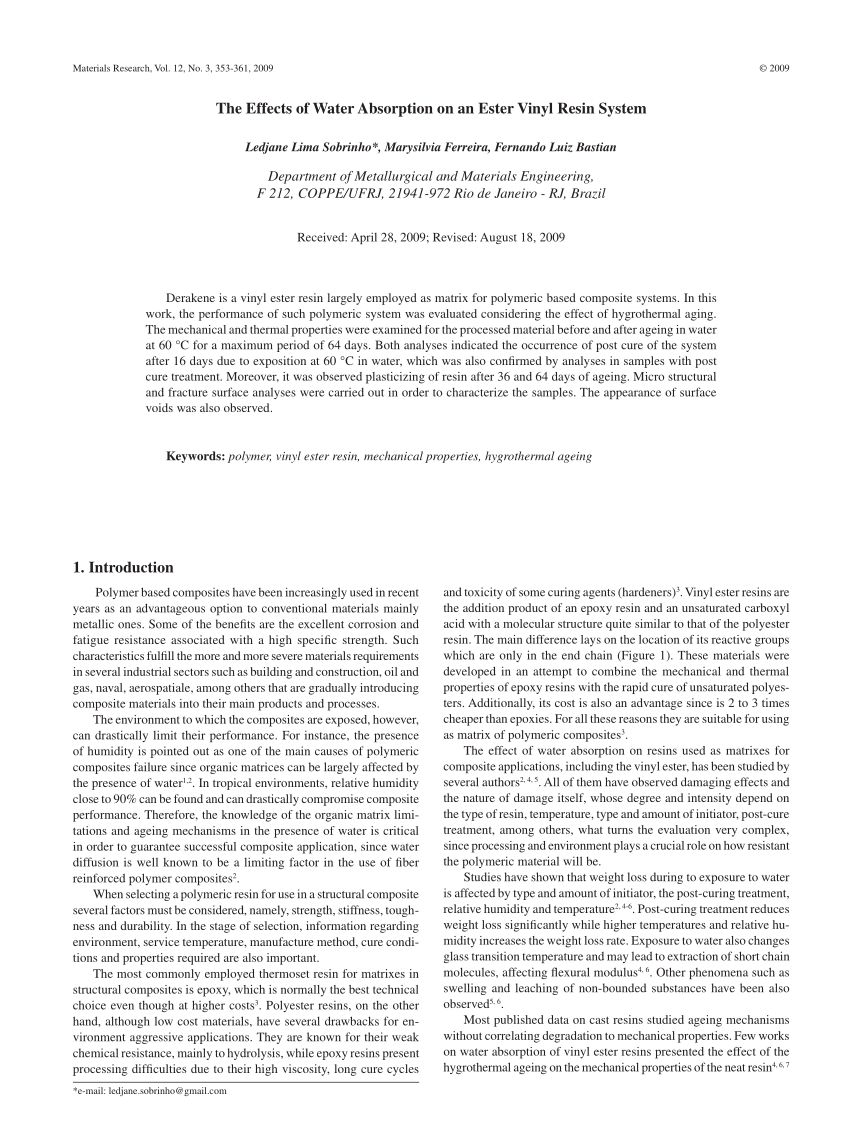
Density Of Vinyl Ester Resin

The Properties Of Vinyl Ester Resin Used As The Binder Of Tested Mixes Download Table

Epoxy Vinyl Esters

Recent Advances In Plant Based Vinyl Ester Resins And Reactive Diluents Sciencedirect

Pdf The Mechanical Properties Of Glass Fiber Reinforcement In Vinyl Ester Resin Valeriia Chuy Academia Edu

Epoxy Vinylester Resin Dion 9700 Reichhold Composite High Cross Link Density
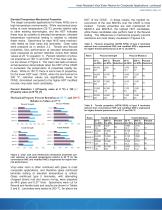
Heat Resistant Vinyl Ester Resins For Composite Applications Aoc Pdf Catalogs Technical Documentation Brochure
Density kg dm3 1 9 2 0.
Density of vinyl ester resin. Vinyl ester resins are produced by the reaction esterification between an epoxy resin and an unsaturated monocarboxylic acid. High density cross linked products are suitable for temperatures above 250 o f 121 o c. The vinyl groups refer to these ester substituents which are prone to polymerize. The shrinkage of vinyl ester resins during cure was calculated according to density measurements to be 4 10 depending on styrene content.
Standard epoxy vinyl ester resins are limited to 220 250 o f 104 121 o c in most applications. They are typically stronger than polyesters and more resistant than epoxies as they are a hybrid form of polyester resin that has been strengthened by epoxy. To make them more workable they are typically dissolved in a vinyl monomer and occasionally a solvent 1 together with an appropriate organic peroxide. Vinyl ester resin or often just vinyl ester is a resin produced by the esterification of an epoxy resin with acrylic or methacrylic acids.
Essentially they comprise a base of polyester resin strengthened with epoxy molecules in the backbone of the molecular chain. Vinyl ester resins combine the best features of polyester and epoxy resins into one solution. 2 the mixture is poured sprayed or molded into the final product and then converted into a thermoset by heating. For vinyl ester resins with longer lengths mn 1000 g mol crosslinked networks have higher.
Vinyl esters also use peroxides e g. Consequently they are generally cut in styrene monomer for management as a liquid resin. The diester product is then dissolved in a reactive solvent such as styrene to approximately 35 45 percent content by weight. Normal viscosity for vinyl esters is less than polyester about 500 centipoise when cut in styrene monomer.
Reactive diluent or monomer styrene commonly 0 60 typically 35 45 viscosity control lower cost improve wetting behavior. Vinyl ester resins are relative viscous low molecular weight prepolymers. It was found that the chain length of vinyl ester oligomers strongly affects the properties of the networks. Polymer resin filler catalyst accelerator etc and click calculate.
It has a measured glass transition temperature t g of 110 c hence allowing the clamp to withstand up to a maximum service temperature of 80 c. Polyester and vinyl ester resins resin pre polymer oligomer 40 to 100 typically 55 65 provides polymer properties including modulus toughness glass transition temperature and durability. Vinyl esters have enhanced mechanical properties compared to polyesters with physical strength better impact and thermal shock resistance. Vinyl ester resin is selected due to its well known performance in marine conditions and good chemical resistance to a wide range of chemicals including sour crude up to 100 c.
Single Ve Chain 35 Styrene 65 Epoxy Vinylester Resin Systems Have Download Scientific Diagram
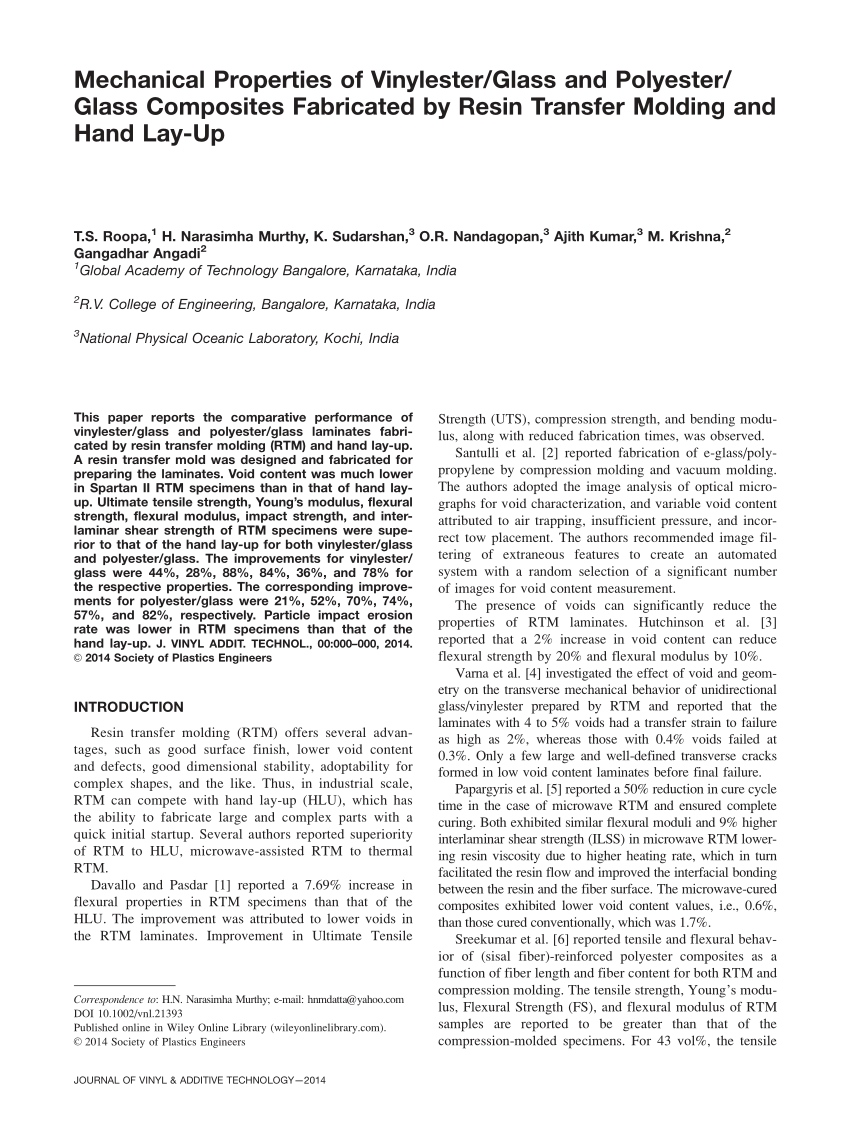
Pdf Mechanical Properties Of Vinylester Glass And Polyester Glass Composites Fabricated By Resin Transfer Molding And Hand Lay Up

Chemical Shrinkage Versus Degree Of Cure Of Vinylester Resin And Associated Download Scientific Diagram
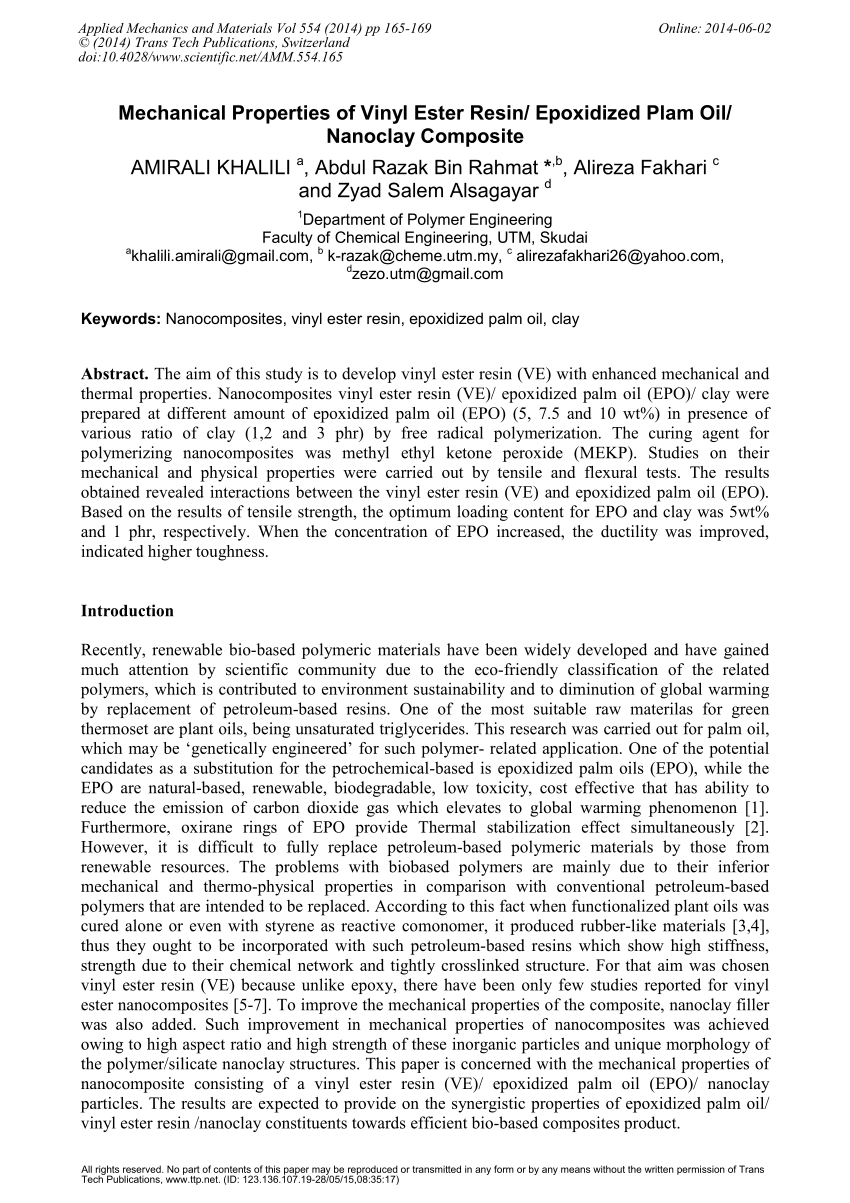
Pdf Mechanical Properties Of Vinyl Ester Resin Epoxidized Plam Oil Nanoclay Composite
Vinyl Ester Resin For Tooling Corrosive High Temperature Environments
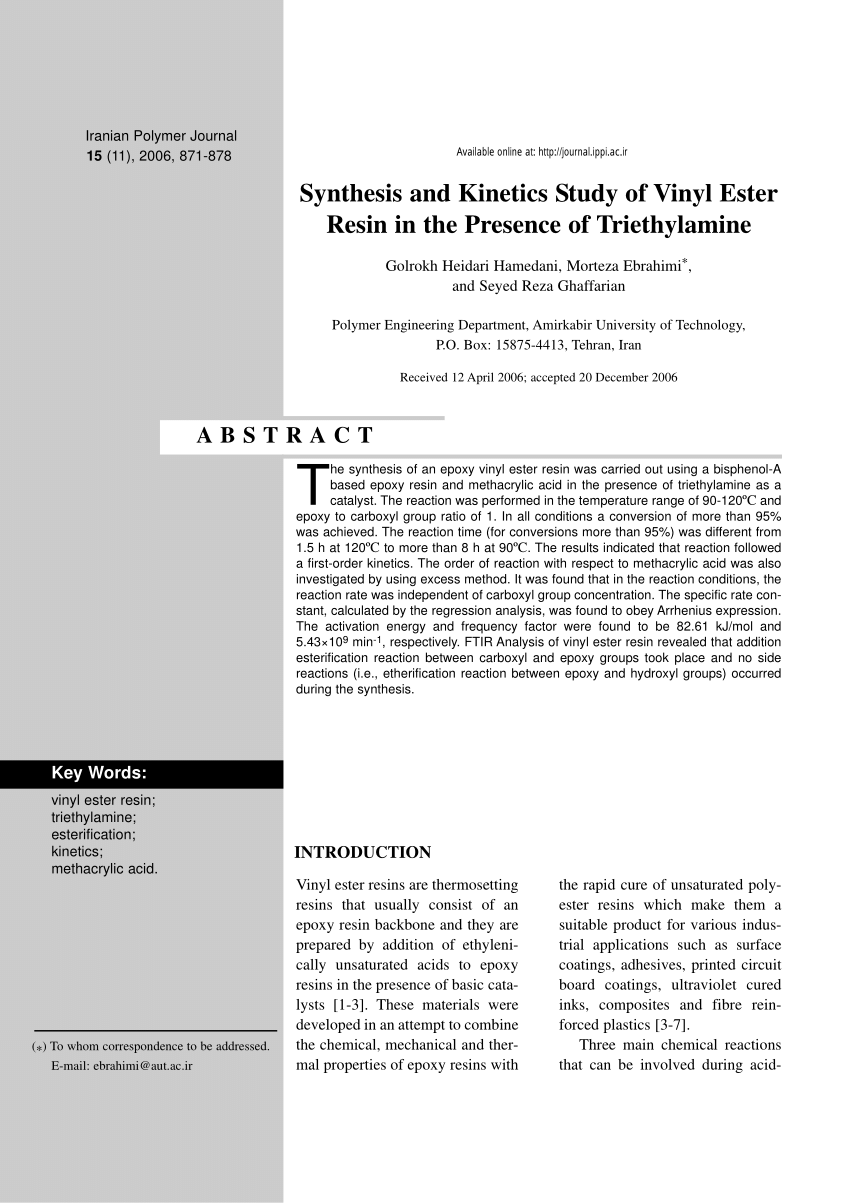
Pdf Synthesis And Kinetics Study Of Vinyl Ester Resin In The Presence Of Triethylamine

Idealised Chemical Structure Of A Typical Vinylester Resin Sp Composites Download Scientific Diagram
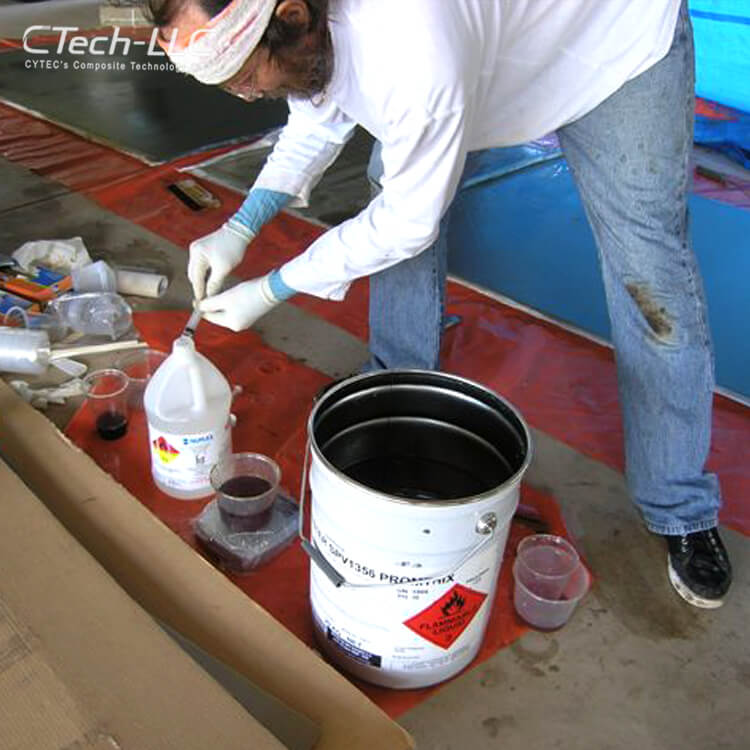
Vinyl Ester Ctech Llc

Pdf On The Effect Of Post Curing Temperature Of Vinylester E Glass Composites With Wet Hand Layup And Vartm An Experimental Investigation For Material Characterisation

Experimental And Numerical Study Of The Dynamical Behavior Of E Glass Vinylester Composites Subjected To In Plane And Out Of Plane High Strain Rate Compressive Loading Semantic Scholar

Typical Fiber And Matrix Properties 2 Download Table
Http Citeseerx Ist Psu Edu Viewdoc Download Doi 10 1 1 829 152 Rep Rep1 Type Pdf

Resin Choice Exel Composites